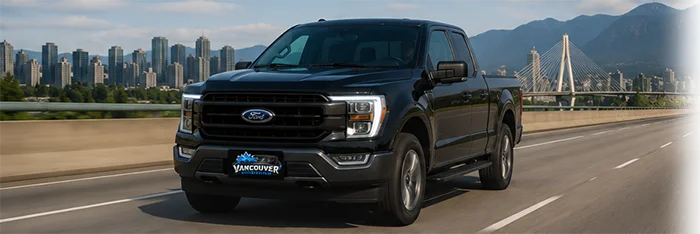

Professional ADAS calibration services in Metro Vancouver
What Is ADAS Calibration and Why It Matters
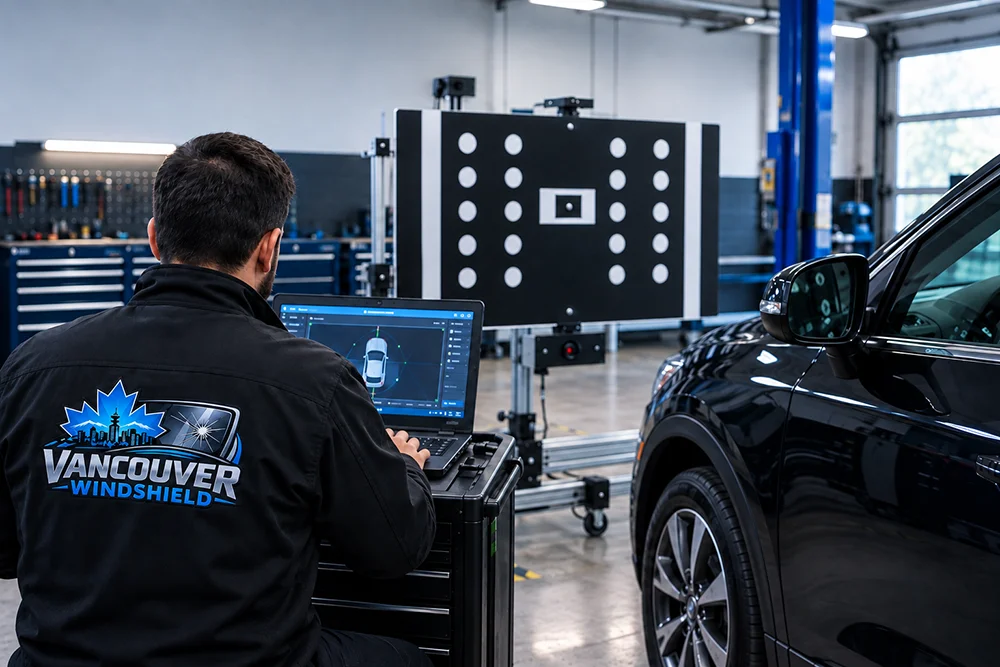
ADAS calibration is the process of precisely adjusting a vehicle’s advanced driver assistance systems to ensure they operate with accuracy and reliability. These systems use forward-facing cameras, radar sensors, and other detection technologies that must be properly aligned to interpret road conditions correctly.
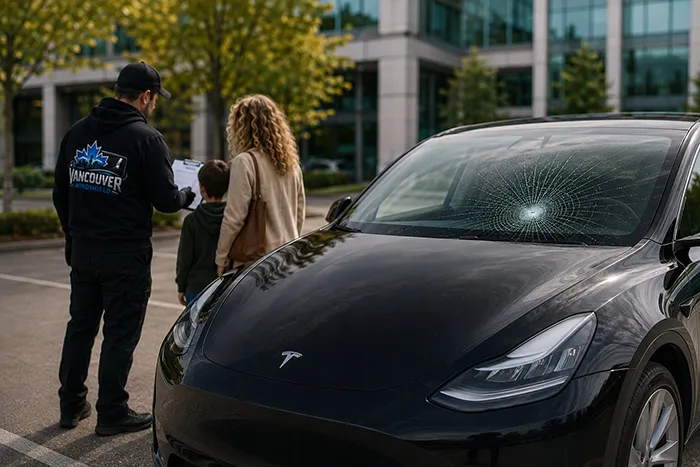
The goal of ADAS calibration is to maintain the accuracy of essential safety features such as lane departure warning, forward collision alert, and adaptive cruise control. Even small changes in sensor or camera positioning—such as those that may occur after windshield replacement—can affect system performance.
By ensuring proper camera calibration and sensor alignment, ADAS recalibration helps preserve the intended functionality of driver assistance systems and supports overall driving safety. These services are typically part of professional auto glass services where vehicle safety systems may be impacted.
When ADAS Calibration Is Required
ADAS calibration is required in situations where a vehicle’s safety and driver assistance systems may no longer be functioning with full accuracy. Since these systems rely on precise data from cameras and sensors, any change in their positioning or vehicle structure can impact how they interpret road conditions.
Identifying when recalibration is needed is important to ensure that safety features continue to operate as intended and provide reliable support during everyday driving.
Signs Your Vehicle Needs ADAS Recalibration
Dashboard Warning Messages
ADAS or safety system alerts may appear after windshield replacement or sensor-related changes.
Changes After Windshield Replacement
System behavior may feel different following glass replacement or repairs involving vehicle sensors and cameras.
Lane Assistance Not Responding Correctly
Lane departure or lane-keeping features may stop working as expected or provide inconsistent alerts.
Unexpected Collision Warnings
Forward collision alerts may activate too early, too late, or behave inconsistently during driving.
Camera Detection Issues
Vehicle cameras may struggle to accurately recognize lanes, vehicles, or surrounding road conditions.
Types of ADAS Calibration Services
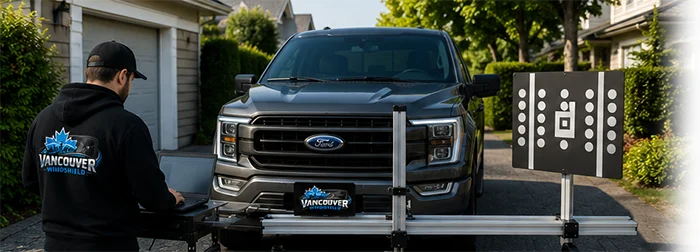
ADAS calibration requirements vary depending on the vehicle, installed safety systems, and manufacturer specifications. Different vehicles may use different calibration procedures to ensure cameras and sensors operate with the required level of accuracy.
Static Calibration
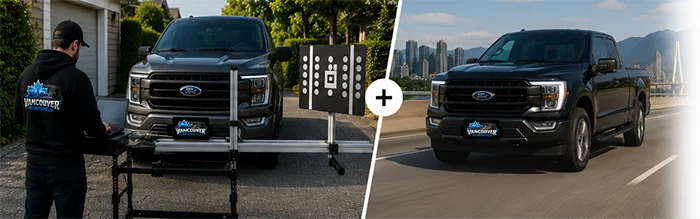
Static calibration is performed while the vehicle remains stationary using specialized calibration targets, measuring tools, and diagnostic equipment in a controlled environment.
Dynamic Calibration
Dynamic calibration is completed while the vehicle is driven under specific road conditions and manufacturer guidelines, allowing the system to verify and adjust camera and sensor performance.
Combined Calibration
Dynamic calibration is completed while the vehicle is driven under specific road conditions and manufacturer guidelines, allowing the system to verify and adjust camera and sensor performance.
The ADAS recalibration process with Vancouver Windshield
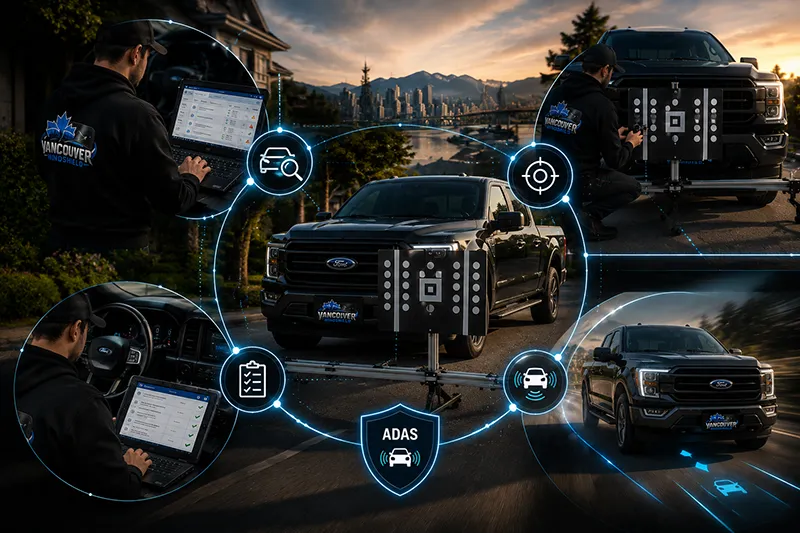
ADAS calibration requirements vary depending on the vehicle, installed safety systems, and manufacturer specifications. Different vehicles may use different calibration procedures to ensure cameras and sensors operate with the required level of accuracy.
- Vehicle Evaluation and Pre-Scan – The process begins by reviewing vehicle information and performing a diagnostic scan to identify active system notifications and calibration requirements.
- Vehicle Positioning and Setup – The vehicle is positioned according to manufacturer specifications, and the required calibration environment is prepared for accurate system alignment.
- Calibration Equipment Setup – Calibration targets, measuring tools, and diagnostic equipment are placed and adjusted based on the specific ADAS system requirements.
- ADAS Calibration Procedure – Static calibration, dynamic calibration, or a combined process is completed depending on the vehicle and installed driver assistance systems.
- Post-Calibration Verification – A final diagnostic review is performed to confirm that cameras, sensors, and safety systems are functioning correctly after calibration.
Mobile ADAS Calibration Service in Metro Vancouver
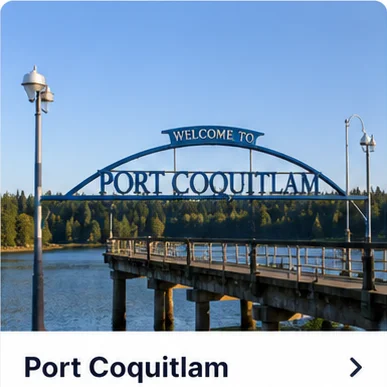
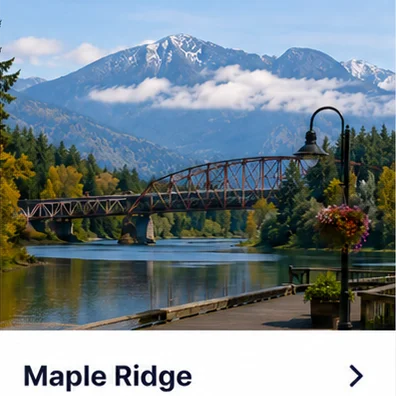
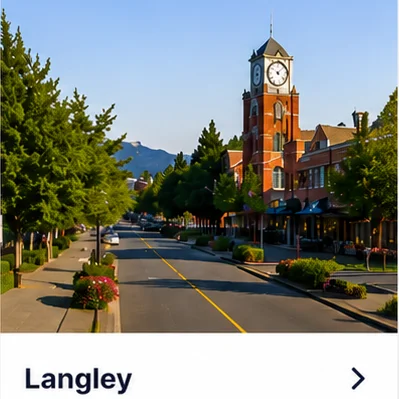
Modern vehicles can rely on cameras and sensors for features such as lane departure warnings, forward collision alerts, and other driver-assistance functions. When these systems require calibration, having the work arranged at a suitable location can make the process easier. Vancouver Windshield provides ADAS calibration services for vehicles throughout Metro Vancouver, with service available for drivers who need their vehicle’s camera or sensor systems checked and calibrated after applicable auto glass work or other related service.
Our Service Areas
ADAS Calibration Cost and Insurance Coverage
The cost of ADAS calibration can vary based on the vehicle model, installed driver assistance systems, and the specific calibration procedure required. Some vehicles may require static calibration, dynamic calibration, or a combination of both methods depending on manufacturer requirements and system design.
Insurance coverage for ADAS calibration depends on the details of the policy and the type of repair involved. In situations where calibration is required after windshield replacement or accident-related repairs, coverage may be available under applicable auto insurance plans.
Understanding these factors can help drivers better plan for calibration services while ensuring vehicle safety systems continue operating with the intended level of accuracy. Experienced technicians at Vancouver Windshield can assist you with any questions regarding ADAS calibration and help guide you toward the most suitable solution for your vehicle. Their expertise ensures you receive clear information and support before proceeding with the service.
Why Proper ADAS Calibration Is Critical for Vehicle Safety
Proper ADAS calibration ensures that driver assistance systems operate with accurate sensor and camera data, supporting safe and consistent performance on the road.
Stable Communication Between Sensors and Systems
Calibration ensures cameras and sensors work in sync with the vehicle’s safety technology
Reduced Risk of Incorrect System Response
Proper calibration helps prevent unexpected or delayed reactions from safety-related features
Stable Day-to-Day Performance
Correct calibration helps maintain predictable system behavior during normal driving conditions
Feedback From Vancouver Windshield Customers
Customer feedback gives an honest look at the way we approach our work, from communication and scheduling to workmanship and attention to detail. Whether a customer has needed windshield service, ADAS calibration, or another type of auto glass service, we value every review and the trust behind it.
FAQs
Does every vehicle need ADAS calibration after a windshield replacement?
No. The requirement depends on the vehicle, its ADAS equipment, and the manufacturer's repair procedures. Some vehicles require calibration whenever the windshield or camera is removed or replaced, while others may have different requirements. The vehicle's year, make, model, and specific equipment should be checked before assuming calibration is or is not required.
How do I know if my vehicle has ADAS that needs calibration?
Many drivers are not sure whether their vehicle has ADAS because the camera or sensor may be hidden behind the rear-view mirror or integrated into the vehicle's design. Features such as lane keeping or lane departure warning, forward collision warning, automatic emergency braking, adaptive cruise control, and automatic high beams can indicate that the vehicle has systems that may require calibration. Vehicle-specific information or the VIN can be used to confirm the exact requirements.
Can I drive my vehicle before ADAS calibration is completed?
If calibration is required after a windshield replacement, it is best to complete the required procedure before relying on the affected driver-assistance features. An uncalibrated camera or sensor may not accurately interpret its surroundings, and some systems may provide warnings or operate differently until the required calibration is completed. Manufacturer procedures should be followed for the specific vehicle.
What happens if ADAS calibration fails?
A failed calibration can mean that the camera or sensor cannot meet the vehicle manufacturer's required alignment or operating conditions. The vehicle may display a warning, store a diagnostic fault, or leave certain driver-assistance functions unavailable. The cause should be identified before considering the calibration complete; depending on the vehicle, this can involve checking the camera position, windshield installation, vehicle condition, diagnostic faults, or calibration setup.
Why is my ADAS warning light still on after calibration?
A warning light that remains after calibration does not necessarily mean the calibration itself is the only problem. The vehicle may have a stored diagnostic fault, a camera or sensor issue, incorrect positioning, or another condition that prevents the system from completing its required initialization. A diagnostic check can help determine why the warning remains and what procedure the vehicle requires next.
How long does ADAS calibration take?
The time depends on the vehicle and the calibration procedure required. Some vehicles use a static procedure with targets and specialized equipment, while others require dynamic calibration involving a controlled road test. Certain vehicles require both procedures, so there is no single time that applies to every vehicle.
What is the difference between static and dynamic ADAS calibration?
Static calibration is performed with the vehicle positioned in a controlled setup using manufacturer-specified targets or equipment. Dynamic calibration uses a road test under specific conditions so the vehicle's system can complete its aiming procedure while driving. The required method is determined by the vehicle manufacturer's procedures, and some vehicles require both.
Can ADAS calibration be done if the windshield was replaced somewhere else?
In many cases, yes. The calibration itself is a separate procedure from windshield installation, although the vehicle's windshield, camera mounting, and related components still need to meet the manufacturer's requirements. Before calibration, the vehicle may need to be checked for installation issues or diagnostic faults that could prevent the procedure from completing correctly.
Does a windshield brand or type affect ADAS calibration?
It can. On vehicles that use a camera mounted behind the windshield, the glass needs to be suitable for the vehicle and its camera system. The position, mounting area, optical characteristics, and other vehicle-specific requirements can matter to the camera's field of view. Using the correct glass configuration is therefore part of ensuring the calibration procedure can be completed properly.
Can ADAS calibration be affected by wheel alignment or other vehicle problems?
Yes. ADAS systems depend on the vehicle and its sensors being positioned according to the manufacturer's specifications. Depending on the system, issues such as incorrect wheel alignment, changes in ride height, damaged mounting points, or other vehicle conditions can interfere with calibration or affect sensor aiming. The specific vehicle procedure determines what needs to be checked before calibration.
How much does ADAS calibration cost in Metro Vancouver?
The cost depends on the vehicle, the ADAS systems involved, and whether the vehicle requires static calibration, dynamic calibration, or both. Some vehicles also require additional diagnostic procedures or manufacturer-specific equipment. Because the procedure is vehicle-specific, an accurate quote usually requires the vehicle's year, make, model, and sometimes VIN rather than a single standard price.
Can ADAS calibration be required even if no warning light is on?
A dashboard without warning lights does not necessarily mean ADAS calibration is unnecessary. Depending on the vehicle and the work performed, a camera or sensor may require calibration under the manufacturer's procedures even if no warning appears. The requirement should be confirmed for the specific vehicle rather than based on dashboard warnings alone.
Can bad weather or road conditions delay dynamic ADAS calibration?
Yes. Dynamic ADAS calibration may depend on suitable road markings, visibility, and driving conditions. Heavy rain, poor visibility, or roads without clearly visible lane markings can prevent the required procedure from being completed. If conditions are unsuitable, calibration may need to be rescheduled or completed using the procedure specified by the vehicle manufacturer.
Will I receive a report or confirmation after ADAS calibration?
The available confirmation depends on the vehicle and the calibration procedure performed. Calibration documentation may include the procedure completed, the result, and relevant diagnostic information. If a calibration cannot be completed or a fault remains, that should be identified rather than treating the process as successfully finished. The appropriate checks and records depend on the vehicle manufacturer's requirements.
Book Your ADAS Calibration Service